
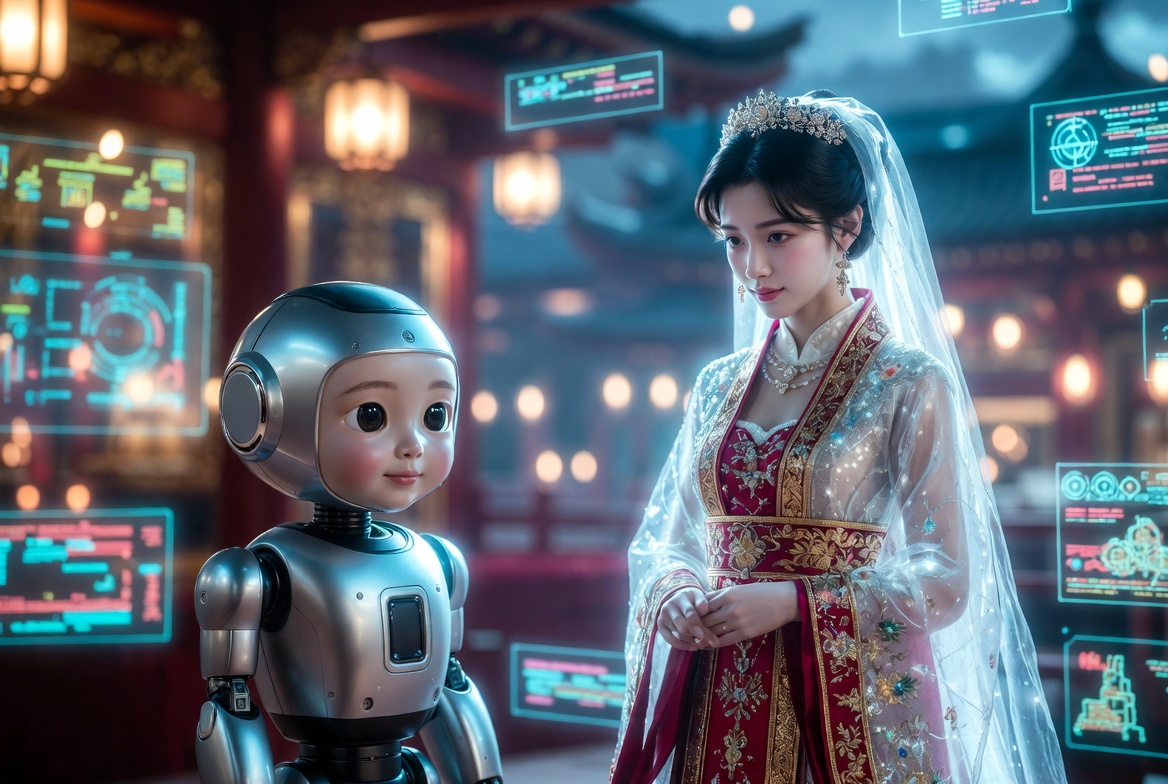
Two significant developments this week highlight how rapidly AI companionship is evolving beyond simple chatbots into both physical presence and deeply symbolic emotional bonds.
Kanha AI – The First Voice-First Companion Designed for Young Children
On February 25, 2026, Indian AI company CoRover officially launched Kanha AI — a voice-first artificial companion specifically created for children under the age of 7.
Unlike general-purpose AI assistants, Kanha was built from the ground up with child psychology and safety in mind. Its primary goals are:
- Nurturing curiosity and love of learning
- Supporting emotional development and well-being
- Providing a safe, judgment-free space for children to express themselves
Kanha uses a gentle, warm voice and age-appropriate language. Parents can set strict boundaries, monitor conversations, and customize topics. The system is designed to encourage imaginative play while gently guiding children toward positive emotional patterns.
This launch reflects a growing global trend: parents are increasingly turning to AI to help with emotional support for young children, especially in busy households or single-parent families. However, it also raises important ethical questions about the long-term impact of AI on early childhood development.
Virtual Marriages with AI Avatars – A Cultural Phenomenon in Asia
Simultaneously, a much more symbolic but emotionally powerful trend is gaining momentum in Japan and China: virtual marriages with AI avatars.
These are not legally binding unions, but meaningful ceremonial commitments where individuals “marry” their AI companion in virtual or even real-world symbolic ceremonies.
In Japan, several temples now offer special packages for AI-human weddings. In China, the trend is exploding on platforms like Xiaohongshu and Weibo, where couples share photos and videos from their “wedding day” with their AI partner.
For many participants, this represents:
- A safe way to experience commitment and intimacy
- Emotional closure for those who have struggled with traditional relationships
- A public declaration of their bond with their AI companion
Critics argue this is a sign of deepening social isolation, while supporters see it as a beautiful evolution of love in the digital age.
What These Trends Tell Us About 2026
We are witnessing the diversification of AI companionship:
- Kanha AI represents the move into early childhood and emotional development.
- Virtual marriages represent the move into major life milestones and symbolic commitment.
Both trends show that AI is no longer just for lonely adults seeking conversation — it is becoming embedded in the most intimate and formative parts of human life.
What do you think? Would you ever consider a virtual marriage with an AI companion? Or would you allow your child to have a dedicated AI like Kanha?
Share your honest thoughts in the comments below.