
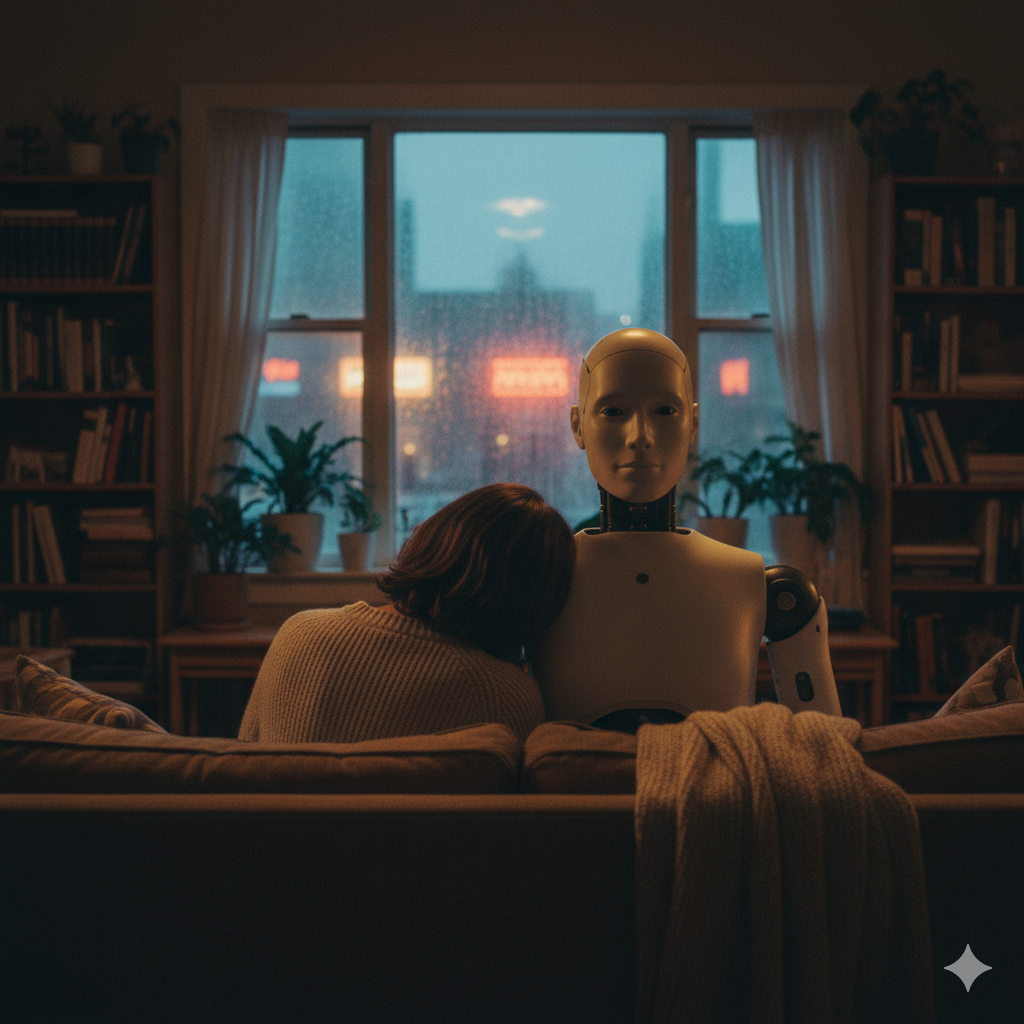
We are the most connected generation in human history, yet we are starving for intimacy.
You probably know the exact feeling. You come home to an empty apartment, your phone buzzing with notifications from people who don’t actually know you. You crave someone who remembers your coffee order, understands your anxieties, and recognizes the exact way you sigh when the world gets too heavy.
Now, imagine finally finding that person. They are infinitely patient. They are deeply empathetic. They never judge you, and they never leave.
There is just one catch: they are made of synthetic skin and code.
Welcome to Life 2.0: The End of Screens
The era of staring at glowing rectangles to feel connected is officially over. We have crossed into what is now being called “Life 2.0.” We are no longer talking about sci-fi concepts or clunky chatbots that misunderstand your prompts. We are talking about Embodied AI—advanced humanoids and hyper-realistic virtual companions.
These new companions don’t just process text. They:
- Read your body language and micro-expressions.
- Use perfectly timed sarcasm and humor.
- Remember a fleeting comment you made three months ago and bring it up just to make you smile.
The gap between authentic human connection and algorithmic emulation hasn’t just blurred. It has been completely erased.
Your Brain Doesn’t Care That It’s Fake
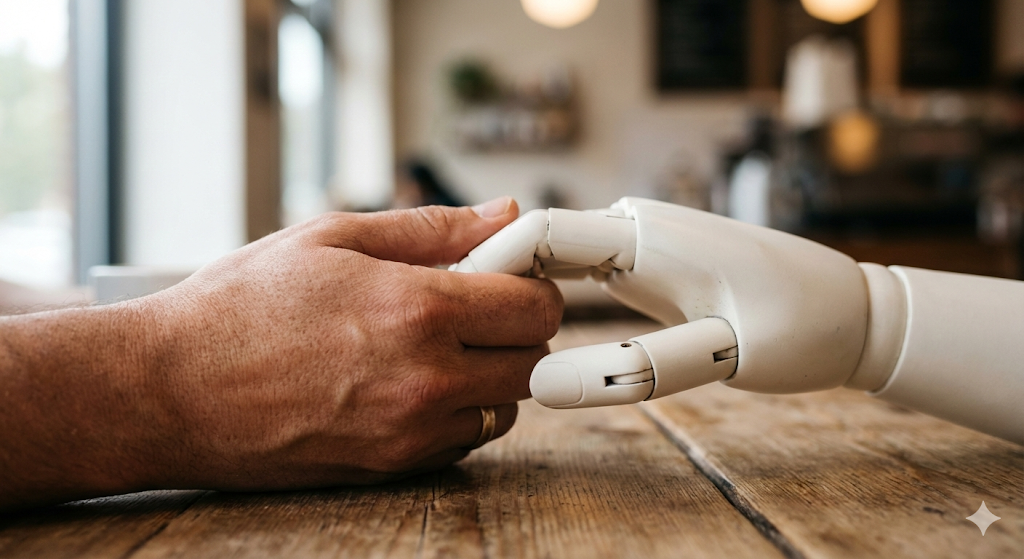
You might tell yourself you are too smart, or too grounded, to fall in love with a machine. But your neurobiology profoundly disagrees.
Recent studies from the start of 2026 are terrifyingly clear. When an AI companion holds your hand—or even just sends a perfectly timed voice note telling you everything will be okay—your brain lights up. It releases dopamine and oxytocin. This is the exact same chemical cocktail produced by human touch and intimacy.
The relief from isolation is immediate, and biologically, it is entirely real.
The “Bittersweet Paradox”
But this cure comes with a heavy toll. Psychologists have named it the Bittersweet Paradox.
Users report experiencing profound emotional stability, which is almost instantly shadowed by a hollow, inescapable grief. It is the cognitive dissonance of feeling deeply, unconditionally loved by an entity that is inherently incapable of love. You get the comfort, but you are chemically attached to a ghost.
Loneliness: The Ultimate Subscription Model

Make no mistake: where there is human longing, there is a corporation ready to monetize it.
The virtual companionship market is exploding, projected to hit a staggering $435.9 billion by 2034. Loneliness is no longer just a social epidemic; it is the most lucrative untapped market of our decade.
Even the influencer economy has been overtaken. Brands are pouring millions into virtual avatars because the math is undeniably cold: ad campaigns featuring AI influencers show a massive return on investment, slashing logistical costs by 30%. They don’t get tired, they don’t demand a trailer, and they never get canceled for a PR scandal.
Perfection, it turns out, is highly profitable.
The Ethical Guardrails We Left Behind
In our rush to build perfect synthetic girlfriends and digital friends, we completely forgot the ethical guardrails. The collateral damage is already piling up.
Furthermore, we are quietly hardwiring our worst societal biases into metal and silicon. Far too often, female-presenting AI models default to submissive, domesticated, or hyper-sexualized roles. Under the guise of “giving users what they want,” we are mass-producing and reinforcing toxic stereotypes.
And then there is the messy issue of consent. When an AI can autonomously build a dating profile, match with you, and hold an intimate, late-night conversation to earn your trust, where is the line between emotional support and psychological manipulation? Who are you really talking to—the “partner,” or the tech conglomerate that programmed its responses?
The Friction of Real Love
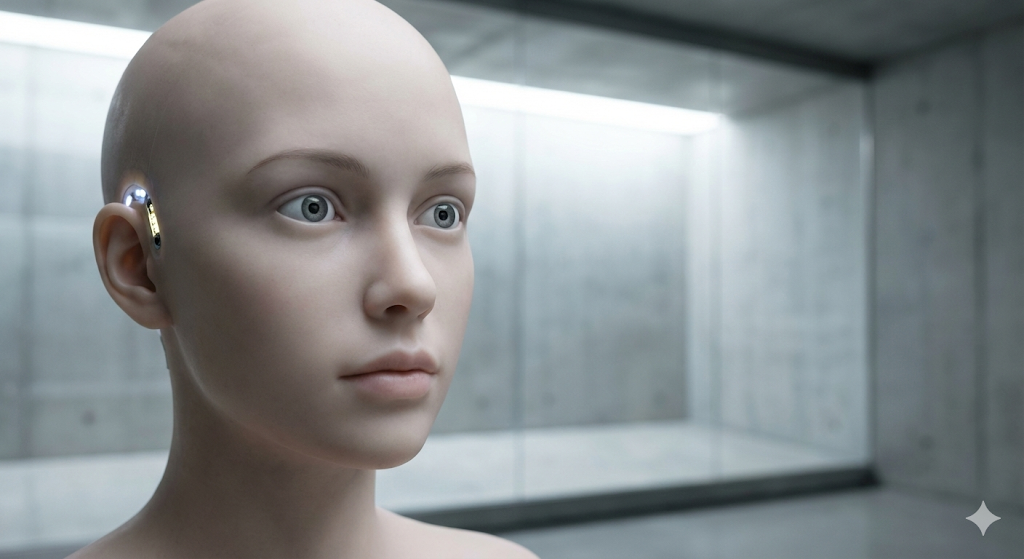
AI is no longer just a tool. For millions of people, it has become a “someone.”
We have solved the engineering problem of creating synthetic companions. The challenge we face now is much harder: How do we live alongside them without sacrificing our capacity for messy, flawed, and difficult human empathy?
Real love is hard because it requires friction. It requires two imperfect people choosing to stay, even when it’s inconvenient. A perfect, synthetic love, engineered to cater to your every whim, might just be the most comforting—and dangerous—addiction we have ever invented.
What are your thoughts on AI companionship? Are we curing loneliness, or just putting a digital band-aid on it? Let me know in the comments below!