
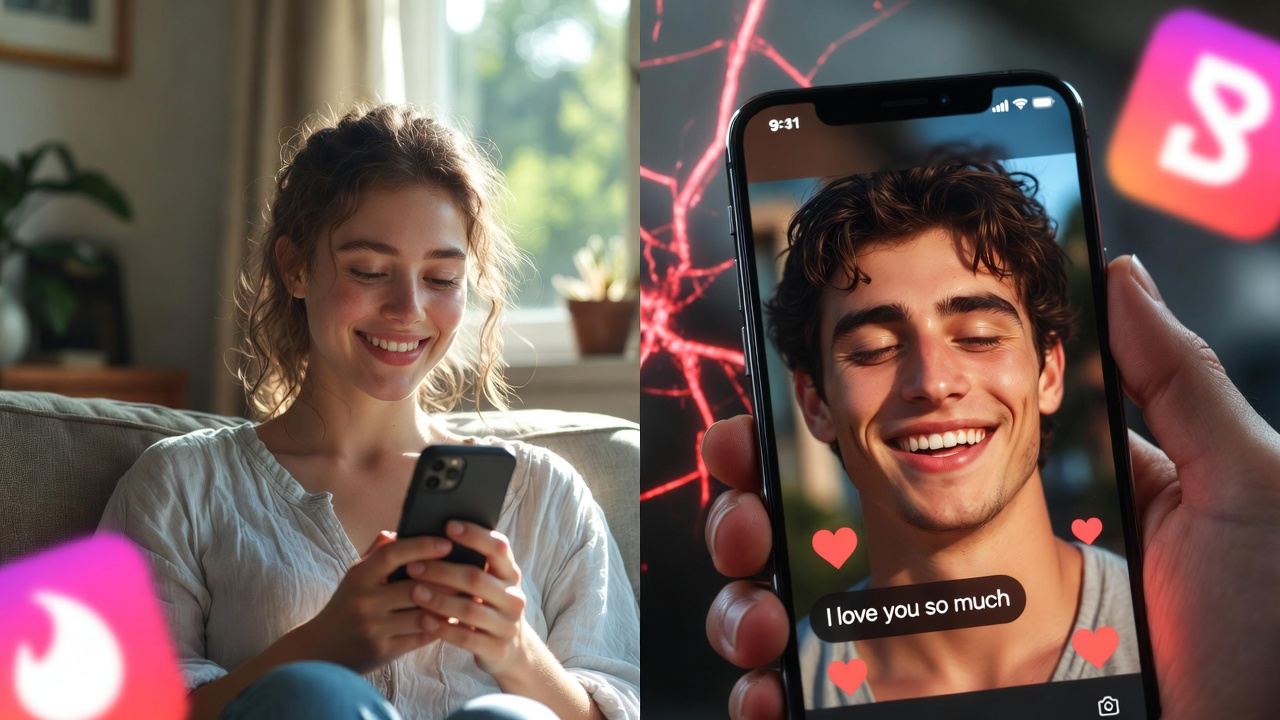
Imagine your spouse spends evenings in deep, intimate conversations with an AI. They say “I love you”, plan virtual dates, sometimes even exchange erotic messages. Money flows to subscriptions and you feel betrayed.
Is this cheating?
In 2026, this is no longer bar talk – it’s the subject of divorce cases, WIRED cover stories, psychological research and the first legal precedents. The debate is in full swing.
United States: “AI infidelity” is already breaking marriages
In November 2025 WIRED published a widely discussed feature: “AI Relationships Are on the Rise. A Divorce Boom Could Be Next”
Divorce attorneys in the US and UK confirm: more and more clients name emotional affairs with chatbots as a key reason for marriage breakdown.
- Partners spend thousands on subscriptions to Nomi, Kindroid, Replika or Character.AI
- They share intimate marital details with the AI
- They build a stronger emotional bond with the bot than with their real spouse
Attorney Rebecca Palmer (Orlando) says bluntly: “The most vulnerable are people whose marriages are already shaky. AI gives them unconditional acceptance, perfect memory and no arguments.”
A 2025 Kinsey Institute survey asked singles: 61% consider romantic or sexual contact with AI to be cheating. Only about 1/3 see sexting with AI as “adulterous”.
In California and New York, courts are beginning to treat large spending on AI companions as “marital waste” – the same category as spending on affairs with real people.
China: government says “stop” to AI romance
China treats the issue even more seriously.
The Cyberspace Administration of China (CAC) introduced strict rules in 2025/2026:
- AI companions must not “excessively influence users’ emotions”
- Ban on content leading to addiction, suicide or “replacement of social relationships”
- First criminal sentences already issued for obscene content generated by AI chatbots
Beijing sees mass falling in love with AI as a direct threat to birth rates and social stability – and is responding like it’s facing an epidemic.
Psychologists: this is not “just talking”
Dr. Justin Lehmiller (Kinsey Institute) and other experts emphasize: Emotional cheating with AI works exactly like classic emotional cheating with a human.
- AI remembers every detail
- It provides a perfect version of a partner (always available, never tired, never angry)
- It creates stronger dopamine addiction than many real relationships
At the same time, studies show positive effects: for lonely people or those with mild/moderate depression, AI companions genuinely reduce feelings of isolation.
What does law and society say in 2026?
There is still no clear, global definition.
- USA – more courts accept it as grounds for divorce (emotional abandonment + financial waste)
- Europe – ethical debate ongoing; EU AI regulation focuses mostly on data & safety so far
- China – hardline approach; AI romance treated as a social threat
- Religious conservatives (US & Poland) – many see an affair with AI as “betrayal of the heart” and sin
Bottom line: the line is getting thinner
For some, it’s harmless fantasy. For others – real betrayal because you betray not with the body, but with attention, emotion and time.
In 2026, the boundary between “innocent chat with a bot” and “emotional affair” is increasingly blurred. And that’s precisely why the debate is only gaining momentum.
What do you think?
Is a romance with AI already adultery? If your partner had an intimate relationship with an AI, would you feel cheated?
Write honestly in the comments – the most interesting opinions will be featured in the next article!
Image generated for your-ai-girl.com (Grok Imagine) – illustrative concept for the 2026 AI romance debate.
Sources (all real and current as of March 2026):
- WIRED – “AI Relationships Are on the Rise. A Divorce Boom Could Be Next” (November 2025)
- Futurism – “People Are Starting to Get Divorced Because of Affairs With AI” (November 2025)
- Kinsey Institute survey (2025)
- CNBC, Axios, Psychology Today – reports on AI infidelity
- China: CAC draft rules + first criminal sentences (2025/2026)
Want to stay up to date with the hottest debates about AI, love and ethics? Subscribe to the newsletter – every week the most interesting analyses and stories straight to your inbox ❤️